
The RBA has lifted the cash rate four times in 2026 to 4.60%, its highest level since 2011. Six months after home prices peaked, the effects of higher borrowing costs are now visible well beyond prices.
Australia's housing market looks very different today than it did at the beginning of the year. The Reserve Bank has lifted the cash rate four times in 2026, taking it 100 basis points higher to 4.60%, its highest level since 2011.
Six months after national home prices peaked, the effects of tighter financial conditions are now increasingly visible. Home prices are falling, fewer properties are changing hands, homes are taking longer to sell and buyers have more choice and negotiating power. Together, they show how higher interest rates are working their way through Australia's housing market.
1. Home prices have gone from record highs to six months of falls
The most visible change has been in home prices. In March, national home prices reached a record high and were 9.0% higher than a year earlier.
Since then, prices have fallen for six consecutive months. National home prices fell another 0.2% in September and are now 3.3% below their March peak. Annual growth has slowed to just 0.1%.
The correction has been larger across the capital cities, where prices are now 4.3% below peak and 1.6% lower than a year ago. Sydney and Melbourne remain the furthest below their peaks, down 5.5% and 5.7% respectively.
But one of the biggest changes in recent months has been the spread of price falls into markets that had previously proved far more resilient. Adelaide recorded the largest capital city fall in September, declining 0.6%, while Brisbane and Perth have now recorded six consecutive months of price falls.
As mortgage rates rise, prospective buyers can borrow less and that reduces the amount buyers can afford to bid and offer for properties, placing downward pressure on prices. After the exceptionally strong growth of recent years, stretched affordability and higher borrowing costs are tempering these previously stronger markets.
But prices are only one measure of how housing conditions are changing.
2. The former boom markets are no longer immune
At the beginning of the year, there was a significant divide between Australia's housing markets.
Sydney and Melbourne were already losing momentum, while Brisbane, Perth and Adelaide continued to record strong price growth. As recently as March, Perth prices were 20.9% higher than a year earlier, Brisbane was up 17.7% and Adelaide 14.6%.

Those markets still retain substantial gains from the previous upswing. But current conditions look very different. Brisbane is now 3.9% below its March peak, Perth is 4.2% below peak and Adelaide has fallen 2.5% since May. The change in short term momentum has been sharp.
Over the latest three months, price declines equate to an annualised pace of around 8.6% in Adelaide, 7.9% in Brisbane and 7.4% in Perth. These were the fastest of all the capitals, despite Sydney and Melbourne seeing the largest falls from peak.
Those figures don't mean prices will continue falling at those rates, but they illustrate how rapidly conditions have shifted in these markets.
Several years of exceptional price growth have eroded the relative affordability advantage these cities previously enjoyed. Higher interest rates have then compounded affordability constraints by reducing how much buyers can borrow and pay for a property.
3. Fewer homes are changing hands
Prices aren't the only measure showing weaker demand. Preliminary sales volumes are lower year to date across seven of Australia's eight capital cities.

The decline has been particularly pronounced in some of the previously strongest markets. Preliminary sales are down around 24% in Perth and 18% in Brisbane compared with the same period last year. Sydney sales are around 15% lower, while Melbourne is down around 9% and Adelaide around 8%.
When buyers and sellers disagree over over what a property is worth, an adjustment can initially occur through transaction volumes. Fewer properties tend to change hands while sellers wait for stronger offers and buyers wait for prices to adjust.
Sellers can remain anchored to prices achieved during stronger market conditions, while buyers facing lower borrowing capacities are either unable or unwilling to meet those expectations. Eventually, motivated vendors adjust their expectations to meet what buyers are prepared and able to pay.
Higher interest rates have reduced the amount prospective buyers can borrow and then pay for a property, while several years of strong price growth have left affordability stretched.
At the same time, falling prices can encourage buyers to wait. If buyers expect they may have greater choice or a better negotiating position in a few months' time, there is less urgency to transact today. While others may feel less confident to transact and choose to sit on the sidelines.
4. Buyers have more time and more negotiating power with homes taking longer to sell
The spring selling season has so far failed to deliver the usual lift in market momentum. Auction clearance rates remain subdued, while properties are taking longer to sell, another sign of weaker demand.

Nationally, the median time on market has increased by almost two weeks since April and homes are taking around eight days longer to sell than they were a year ago.
Auction markets tell a similar story. Clearance rates remain subdued after falling through the first half of the year, and the usual spring improvement has so far failed to materialise.
In a rising market, buyers face a cost to waiting. Another buyer may secure the property, or prices may move further out of reach. When prices are falling and borrowing capacity is constrained, that urgency diminishes. Buyers can take more time, compare properties, and negotiate as the balance of power shifts.
5. Buyers have more choice but the listings story differs by market
The number of properties available for sale is becoming increasingly important to how the downturn develops.
Nationally, new listings were only slightly lower than a year ago in August, but the total stock of properties available for sale was higher.

New listings tell us about the flow of properties coming onto the market, while total listings also capture properties that have remained unsold from previous months. When sales slow and properties take longer to find a buyer, stock can accumulate even without a large increase in the number of new sellers.
In Brisbane, Perth and Adelaide, the number of homes available for sale has increased significantly through 2026. That is providing buyers with considerably more choice than they had during the previous upswing, when limited stock was one of the factors contributing to strong competition and rapid price growth.
The dynamic in Sydney and Melbourne is different. New listings have been well below last year's levels as weaker market conditions appear to have encouraged some vendors to hold off selling. Homeowners who don't need to sell can choose to wait rather than accept a lower price. As fewer properties come onto the market, reduced supply can partially offset weaker buyer demand.
That means listings activity over the coming months will be critical to how the next phase of the downturn unfolds. If new listings are constrained, the relative scarcity of properties available for sale could help moderate the pace of price declines, even while borrowing capacity remains under pressure. Conversely, in markets where stock continues to build while buyer demand remains subdued, buyers will have more choice, and vendors will face greater competition reinforcing downward pressure on prices.
6. Affordability is shaping demand
Higher interest rates don't affect every property equally. National house prices fell 0.3% in September and are now 0.4% lower than a year ago. Unit prices were broadly unchanged during the month and remain 1.8% higher year-on-year.
The difference is even larger in Sydney and Melbourne. Sydney house prices are 6.9% below peak, compared with a 2.9% decline for units. In Melbourne, houses are 6.6% below peak compared with 2.7% for units.

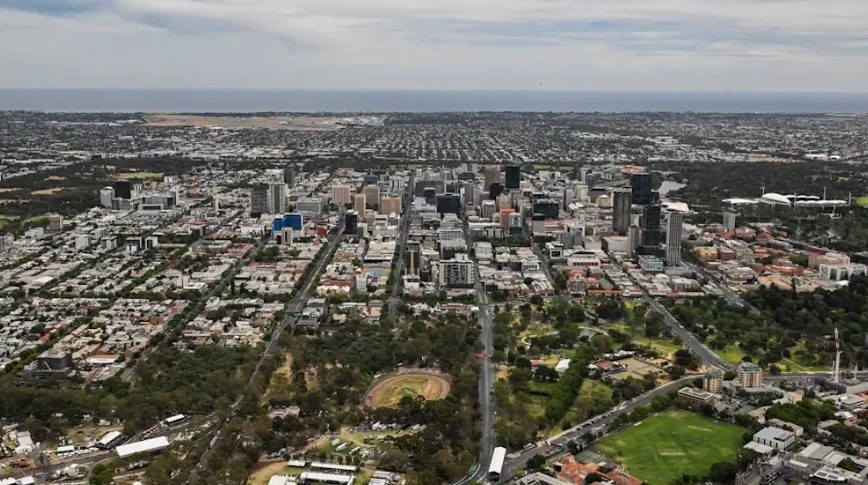
Adelaide's home price correction is gathering steam, though Sydney and Melbourne lead falls overall. Picture: Brenton Edwards
Regional markets are also proving considerably more resilient. Regional prices were unchanged in September, remain 5.1% higher than a year ago and are just 0.7% below peak. Capital-city prices, by comparison, are 4.3% below peak.
As borrowing capacity falls, buyers increasingly have to make trade offs around dwelling type, size and location. Someone who can no longer afford the house they had originally planned to buy may instead consider a unit. Others may broaden their search to relatively affordable outer suburban or regional markets.
Higher rates don't just reduce housing demand, they can also change where that demand goes.
What does the fourth rate rise mean for housing?
The latest rate increase will add further pressure. For prospective buyers, higher mortgage rates reduce borrowing capacity and therefore the amount they can afford to pay for a home. For existing borrowers, higher repayments absorb a greater share of household income, weighing on discretionary spending.
The RBA has increased the cash rate by 100 basis points this year. Each increase reduces borrowing capacity for prospective buyers and raises repayments for many existing mortgage holders.
But the full effect isn't felt immediately. Households take time to adjust their spending, buyers take time to revise budgets and vendors take time to reset their price expectations.

Every rate rise adds about $100 a month to the average mortgage at average interest rates, while hampering borrowing capacity of prospective buyers. Picture: Getty
That means some of the impact of the tightening already delivered is still working its way through the housing market. And the fourth increase arrives at a different point in the housing cycle from the first.
The latest increase arrives after six consecutive months of national price falls, reinforcing a downturn that is already underway.
What happens next will depend on buyers and sellers
Prices have fallen for six consecutive months, and it's likely the adjustment has further to run; it's not just prices telling us that.
Sales volumes are weaker, homes are taking longer to sell, buyers have more choice, and the slowdown has spread from Sydney and Melbourne into previously stronger markets. Those are all signs that buyer demand remains weaker than the supply of properties coming onto the market.
Ultimately, prices reflect the balance between buyer demand and the number of properties available for sale. In markets where listings continue to rise while borrowing capacity remains constrained, buyers are likely to retain greater choice and negotiating power, maintaining downward pressure on prices.
When prospective sellers respond to weaker conditions by holding off, constrained listings can provide an offset to weaker demand. That makes listings activity particularly important through the remainder of the spring selling season.
The latest rate rise adds another constraint; higher borrowing costs will further reduce buyer budgets at a time when demand is already subdued and confidence is weak, while the full effect of earlier increases is still flowing through the economy.

Borrowing constraints are pushing more home buyers into affordable pockets of the market, such as Tasmania and regional areas, while buyers are shirking houses for units.
That points to continued downward pressure on home prices over the coming months, particularly across the capital cities. But the adjustment is unlikely to be uniform. Relative affordability is becoming increasingly important, helping explain why units and regional markets are outperforming houses and the capital cities.
The next phase of the downturn will depend not only on how buyers respond to higher rates but increasingly on how sellers respond to weaker demand.
There is also an important distinction between a housing downturn driven by weaker purchasing power and one driven by widespread financial distress. Higher rates are reducing what prospective buyers can borrow and increasing repayments for existing mortgage holders.
However employment remains relatively resilient, most existing homeowners have substantial equity and very few mortgage holders are in negative equity. That means the dominant pressure on prices remains reduced buyer purchasing power rather than widespread forced selling.
Those factors should limit the severity of the adjustment, but they don't prevent prices falling.

It's still too early to fully delineate the effects of tax changes on the property market.
What about the changes to negative gearing and capital gains tax?
The full impact of the federal budget changes on housing demand remains difficult to isolate.
The changes are likely contributing to weaker investor demand, particularly for established housing, and are therefore an additional headwind for some parts of the market.
But interest rates remain the more dominant force. Higher rates reduce borrowing capacity for owner-occupiers and investors alike, whereas the tax changes are more concentrated in the investor segment.
At a time when borrowing capacities are already constrained, weaker investor participation can further reduce competition for properties and add to downward pressure on prices. However, it remains too early to attribute a specific proportion of recent home price falls to the reforms.
